


Washington State Ferries’ Long-term Plan to Electrify its Fleet is Beginning to Take Shape, But the Price tag is Not Cheap!


Our ferries are near and dear to our hearts. Some long-time commuters estimate they’ve spent years of their lives plying back and forth between Bainbridge Island and Seattle on the rapid waters of Puget Sound.
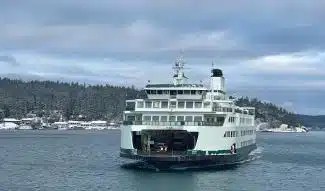
Deals have been done, friendships have been forged, fun times have been had on boats with Native American names like Hyak, Walla Walla, Tacoma and Puyallup. All the while those trips have been aboard vessels that use harsh fuels that pollute the air and raise the so-called carbon footprint in our region. It has been with this realization in mind that Washington State Ferries, with help from the State Legislature, is moving in the direction of electrifying the fleet.
That move, though, is not likely to happen anytime soon. Under its long-term plan, WSF will rebuild and modernize its fleet and convert its system, the largest in the country, to hybrid-electric power by 2040. Rebuilding the fleet is necessary, officials say, to ensure reliable ferry service, and transitioning to a hybrid-electric fleet is “necessary to reduce emissions, ensure resiliency, and reduce operations and maintenance costs.”

ADVERTISEMENTS:
 Chris Miller – Windermere Real Estate Bainbridge


As the biggest contributor of greenhouse gas emissions among Washington state agencies, WSF burns approximately 19 million gallons of diesel fuel to support nearly 20 million passengers every year. This innovative electrification program, WSF officials add, “will drastically reduce greenhouse gas emissions and save millions in fuel costs.”
The agency aims to build a reliable and emission-free ferry fleet by 2050. To get there, it will expand its current fleet by converting six existing vessels to hybrid-electric power, building 16 new hybrid-electric vessels and adding shore charging to 16 terminals.
The Ferry System Electrification Program is estimated to cost $3.98 billion. $1.68 billion is currently funded, including $1.03 billion from Move Ahead Washington and $599 million from the Climate Commitment Act (CCA). The CCA supports Washington’s climate action efforts by putting cap-and-invest dollars to work reducing climate pollution, creating jobs, and improving public health, officials note. Information about the CCA is available at www.climate.wa.gov
In collaboration with regional utilities, WSF is currently updating 16 terminals to charge hybrid-electric ferries. It established memorandums of understanding with Seattle City Light and Puget Sound Energy to add power to the first five terminals: Bainbridge Island, Seattle, Clinton, Bremerton, and Kingston. Adding power involves routing new dedicated power lines and installing switchgear and a vessel charging system. Construction is currently anticipated to start in 2026 with Seattle. and is expected to wrap up in 2029.

While WSF is one of the first – and largest – ferry systems in the US to electrify its fleet, this technology has been broadly applied throughout northern Europe with more than 70 comparable vessels in service going back to 2015.
In general, hybrid-electric ferries provide additional system resiliency by implementing a second power source that allows a vessel to continue service if there are any issues with the electricity. And what’s more, having diesel as a secondary power source allows WSF to manage utility costs in a way that is most cost-effective while still providing greenhouse gas (GHG) emission reductions, say officials. This model also facilitates an earlier transition to electrification, with the first vessels operating as hybrids prior to full terminal electrification.
A few weeks ago, WSF opened bids from shipyards to build up to five new, hybrid-electric 160-auto ferries. Three shipyards were prequalified to bid, and WSF received bids from two: Eastern Shipbuilding Group of Panama City, Florida and Nichols Brothers Boat Builders of Freeland, Washington. WSF is reviewing the bids to ensure compliance with requirements and will evaluate the bid documents and supporting information before its awarded. Price is only one factor, and no assumptions should be made about awarding the contract. The bid recap can be found on the procurement website.
 According to The Seattle Times, The Seattle Times | Local news, sports, business, politics, entertainment, travel, restaurants and opinion for Seattle and the Pacific Northwest. Nichols Brothers Boat Builders bid was significantly higher than Eastern Shipbuilding Group. A third company that was expected to bid, Hanwha Philly Shipyard in Philadelphia, didn’t submit a proposal. Eastern’s bid estimated the first boat would cost $251.3 million and put its total bid for three boats at $714.5 million. Nichols estimated a first boat would cost $338.6 million, and its three-boat bid is more than $1 billion.
The state estimated that boat one would cost $256.8 million, meaning Nichols’ bid was 32% higher than the state’s figure and Eastern’s is 2% lower, The Times reported. The lower estimate from Eastern Shipbuilding doesn’t automatically result in it being awarded the contract. A WSF spokesperson said the agency hopes to award the contract in a week or two and sign it by the end of June, The Times said.
Implementation schedule
To transition to hybrid-electric power by 2040, WSF will:
- Build 16 new hybrid vessels
- Retrofit 6 current diesel vessels to hybrid
- Retire 13 diesel vessels
- Electrify 16 terminals
 WSF will approach this transition in three key project areas over the next 20 years: vessel construction, vessel conversion, and terminal electrification. Its program schedule will continue to be updated as projects advance.
Cost and Funding
The Ferry System Electrification program is estimated to cost $3.98 billion, with $1.68 billion currently funded from grants, state, and federal funding.
Summary of key funding sources
- $1.03 billion from Move Ahead Washington
- $599 million from Climate Commitment Act (CCA)
- $35 million from the State of Washington Department of Ecology Volkswagen Enforcement Mitigation Action Grant
- $12.5 million from Congestion Mitigation and Air Quality (CMAQ) grants
- $4.9 million from FTA Passenger Ferry Grant program for Clinton Terminal Electrification
- $2.5 million USDOT Community Directed funding for Seattle Terminal Electrification
- $1.5 million from MARAD Marine Highway program for Jumbo Mark II Conversion
 2040 Long Range Plan

2040 Long Range Plan (PDF 11.4MB) , which was delivered to the Legislature in January 2019, recommends short-, medium- and long-term actions for WSF to pursue and focuses on a set of investments and service enhancements to be implemented over 20 years. One of the key recommendations is to move toward a “greener” ferry fleet with the goal of a reliable fleet that has a lighter footprint on the environment and outperforms carbon dioxide reduction targets. These goals were captured in the System Electrification Plan (PDF 4MB) in Dec. 2020.
System Electrification Plan
WSF developed a System Electrification Plan (PDF 4MB) that expands on the 2040 Long Range Plan (PDF 11.4MB) to evaluate alternatives and propose an efficient strategy for using hybrid electric vessels throughout the system. The plan was delivered to the legislature in January 2021.
To receive the appendices for the electrification plan, please email WSFElectrification@wsdot.wa.gov .
If you’d like to read more articles from The Island Wanderer Blog website, click here, to subscribe to The Island Wanderer Blog, click here.
ADVERTISE WITH US! We offer exceptional rates and packages for advertisers, to learn more, contact us at Contact Us | THE ISLAND WANDERER


